
Published on 20 May 2026 · 6 min read
How the Underground Cellars of Valdevimbre Were Dug — Generations of Hand-Carved Heritage
Each cellar in Valdevimbre was carved by hand into clay, generation after generation. A chronicle of how wine, subsistence and family inheritance shaped a unique underground landscape in northern Spain.
A village hollowed from within
A few kilometres south of León, the village of Valdevimbre hides one of the densest and oldest networks of underground cellars in Spain. From the outside there is almost nothing: a mound of earth, a wooden door, a clay chimney rising from the ground. Inside, a labyrinth of galleries up to 50 metres deep.
The first documentary references appear in 12th- and 13th-century medieval scriptures, when the monasteries of Eslonza and Sahagún began registering family cellars as inheritable property. Most of the cellars that survive today were dug between the 16th and 19th centuries, during the great expansion of viticulture on the León plateau.

How they were dug: pickaxe, hoe and generational patience
The cellars are excavated by hand into the compact clay of the riverbank — a Quaternary deposit of the Esla river. This clay has three technical advantages:
- It is stable: once excavated, the gallery holds without internal cladding.
- It maintains a constant temperature between 11 and 14 °C all year round.
- It is hygroscopic: it regulates ambient humidity between 80 and 90 %, ideal for wine ageing.
The process was slow. A family could take two or three generations to finish their cellar. The father dug the entrance and the first room — the portal — with pickaxe and hoe. The son deepened the central callejo. The grandson added the press chamber and the lateral cabezadas for the barrels. The clay extracted was carried out in sacks by hand and piled on top of the cellar itself: that is why many of them are shaped like burial mounds.
The zarceras: useful architecture
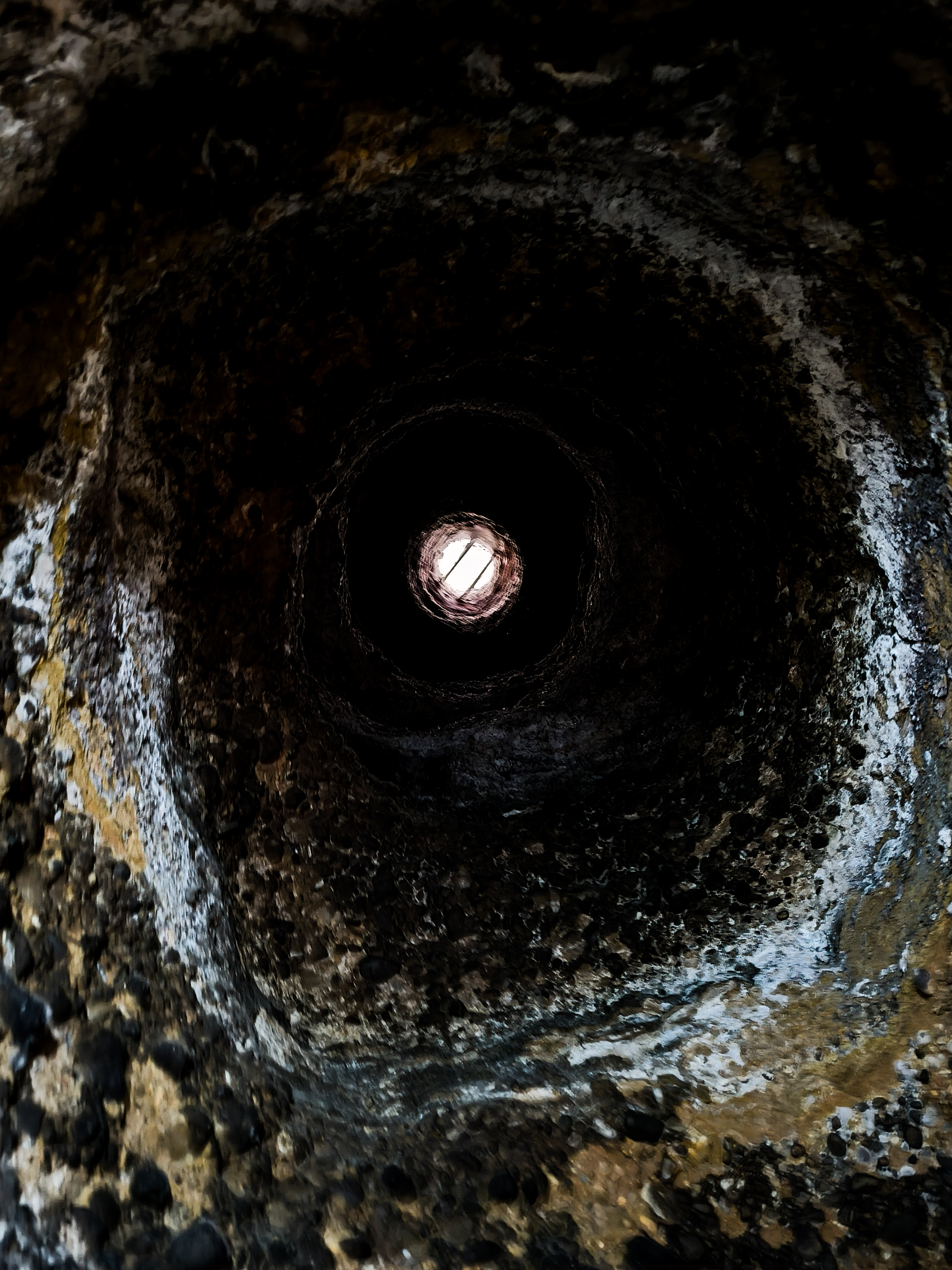
Each cellar has one or several zarceras — vertical chimneys connecting the gallery to the surface. Their function is twofold:
- To vent the CO₂ produced during fermentation — without them, the winemaker would suffocate.
- To renew the air and maintain a stable microclimate.
The zarceras are capped with clay or tile to prevent rainwater entering. From the outside, they are often the only sign that a cellar exists below: small brick cones emerging from the field.
Subsistence, not luxury
To read these cellars as a romantic indulgence would be a mistake. Until the mid-20th century, wine was the only safe drink in rural León: well water could be contaminated, milk soured, but wine — by its acidity and alcohol content — kept.
Each peasant family produced just enough for the year: between 800 and 2,000 litres, stored in oak barrels or, earlier, in tarred goatskins. The cellar was larder, workshop and refuge: cured meats hung from its ceiling, the year''s supply of bread and lard was stored inside, and in times of war or drought, the harvest itself was hidden there.
The wine produced was not for sale. It was for surviving the winter.
Why they are still alive
Unlike many European regions where wine caves were abandoned with industrialisation, in Valdevimbre the chain never broke. The cellars kept being used because their maintenance cost is practically zero: no machines, no electricity, no air conditioning. The cave does the work itself.
Today, around 300 families in Valdevimbre still keep an active cellar as living heritage. Some still vinify in them; others use them for the Sunday merienda; a handful — ours among them — open them to travellers who can see beyond the wine itself, into the history that holds up every glass.
To visit
If you want to step inside a centuries-old cellar — not a recreation, but a real one — write to us. We host one party at a time, picked up at your hotel in León.
Tags
- history
- Valdevimbre
- underground cellars
- heritage
- León wine
- Esla river
- viticulture history